
The no-and-low conversation in Australia has moved past the gimmicky stage. People aren't asking for non-alcoholic gin because they're doing Dry January — they're asking because they want something genuinely good to drink at 4pm on a Tuesday, or while the children are still awake, or because they're driving home. The category has finally caught up with the demand.
Here's what's actually worth buying, with the right way to serve it.
The proper non-alcoholic option: Gambetta
Gambetta Non-Alcoholic Traditional Apéritif ($24) is the bottle to keep in the fridge. It's a French non-alcoholic apéritif — think of it as a French Chinotto or a more grown-up Italian soda — made from bitter botanicals and citrus, with the same structure as a vermouth but without the alcohol. Serve it the way you'd serve any apéritif: 90ml over ice, top with sparkling water, a wedge of lemon or orange. At 0% ABV and $24 for a 750ml bottle, it's the rare non-alcoholic option that doesn't feel like a compromise.
The G&T version: 60ml Gambetta, 90ml tonic, lots of ice, a slice of pink grapefruit. Costs about $3 a glass. Tastes serious.
The low-alcohol vermouth route
Vermouth is usually 16-18% ABV — about half the strength of a gin or whisky and a third of an aged spirit. A vermouth-and-soda is a low-alcohol drink the way Italians have been doing it forever.
Dolin Vermouth Blanc ($34) at 16% ABV. Serve it 90ml over ice with soda and a slice of lemon. About 0.6 standard drinks per glass. It's a real drink, with herbal complexity, that you can have two of and still drive.
Same trick with Maidenii Dry Vermouth ($54) — the Australian-made version on a Victorian Syrah base, with native botanicals. The drinking experience is genuinely interesting even at the lower strength.
The spritz at half strength
A regular spritz is about 1.5 standard drinks. You can engineer one at half that without losing the pleasure.
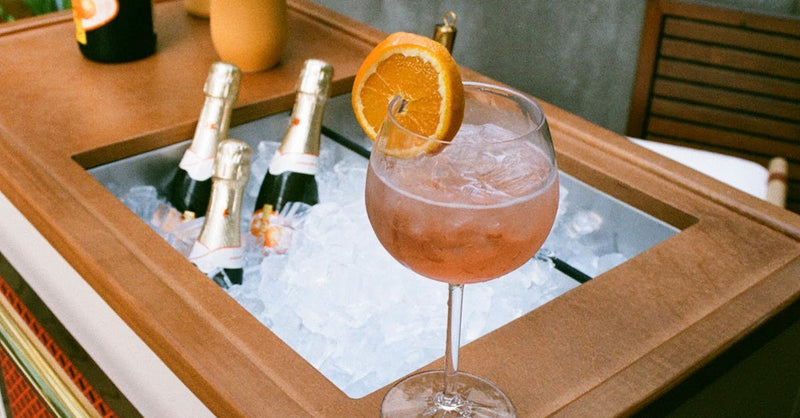
The recipe: 30ml Dubonnet Rouge ($37, 14.8% ABV), 90ml soda water, 30ml sparkling wine, an orange slice. The Dubonnet does the heavy lifting on flavour; the soda water provides volume. About 0.7 standard drinks.
Even lower: 30ml Gambetta non-alcoholic, 90ml sparkling water, 30ml sparkling wine. About 0.4 standard drinks, served in a wine glass over ice. Looks like everyone else's drink.
The dilution trick that nobody admits
The cheapest way to lower-alcohol drinking: pour proper cocktails, then double the soda. A spritz that's 2:2:2 (sparkling, apéritif, soda) becomes 2:1:3. You barely notice the dilution if the apéritif is good — cheap apéritifs taste worse when diluted, expensive ones often taste better. The Maidenii Classic Vermouth ($54) and the Dolin Blanc both reward dilution.
The pour-over-ice play
Vermouth on the rocks with an orange wedge — not a cocktail, not a wine, just a stiff apéritif served the European way — is the simplest low-alcohol drink there is. Dolin Vermouth Rouge ($34) over a big ice cube, orange slice, two minutes of stirring. About 0.7 standard drinks. Works for a quiet weeknight or the start of a Sunday lunch.
What we don't stock (and why)
We've tried most of the non-alcoholic spirits on the market. Most of them are not good — they taste like flavoured water, they cost more than the equivalent gin, and they don't deliver on the promise. Gambetta works because it's not pretending to be gin — it's an apéritif drink in its own right, made by people who understand what an apéritif is supposed to do. We'd rather stock one bottle that works than ten that don't.
For non-alcoholic wine, the same principle applies: most are dealcoholised regular wine and they taste like grape juice with a slightly chemical edge. We're waiting for the category to mature before we stock it.
The short list
- 0% ABV apéritif: Gambetta Traditional, $24
- Low-alcohol vermouth (16%): Dolin Blanc, $34; Dolin Rouge, $34; Maidenii Classic, $54
- Light spritz apéritif: Dubonnet Rouge, $37
- Australian low-ABV option: Maidenii Dry Vermouth, $54
That's the working short list. None of them are non-alcoholic theatre; all of them are drinks you can serve to a guest without explanation.
— Maeve, Caravan Wines & Spirits