Careful bottle-safe packing on all orders. Shipping rates appear at checkout.

Trimbach
Trimbach Reserve Riesling 2022
Style
Wine France White
Producer
Trimbach
Origin
Alsace (Ribeauvillé)
Open this first
What it tastes like.
The Reserve Riesling is made up of older vine material, averaging around 45-50 years, taken from the estate’s vineyards in Ribeauvillé and Bergheim, including the Grand Cru of Altenberg de Bergheim and the lieu-dits of Hagueneau and Pflaenzer. The fruit is crushed and pressed then fermented in stainless steel tanks. In line with the house’s fresh and vivacious style, the wine does not undergo malolactic conversion or long lees maturation. 12.94% Alc/Vol; 5.3 g/L RS; 9.09 g/L TA, pH 3.04.
‘The 2022 Riesling Réserve is from top vineyards in Ribeauvillé and Bergheim that haven't been sourced for the grands crus but are partly seriously old. Bottled in April 2023 and already released, the wine displays a clear and refined, intense and elegant bouquet of fully ripe and spicy fruits but also remarkably floral talents. The wine is lush and intense on the refined and elegant palate, provided with some Muscat-like aromas, ripe, saline acidity and very fine tannins. The finish is harmonious, fruit-intense and backed up by a serious mineral structure. Superb. 13% stated alcohol. Natural cork. Tasted at the domaine in April 2024.’ 93 points, Stephan Reinhardt, The Wine Advocate, Feb 2025
The house
Trimbach at a glance.
Place and craft
Where it is from.
OriginAlsace (Ribeauvillé)
ProducerTrimbach
StyleWine France White
The useful bits
Specs and numbers.
Vintage2022
SKUVVTRIMRESRIE22
Delivery
How it gets to you.
Brisbane and nearby delivery options appear at checkout when available.
Quick answers
Before you checkout.
Can I mix this into a six-pack?
Yes. Any eligible mix of six bottles can count toward the mixed-six offer at cart level.
Is the bottle held for me after adding to cart?
Not permanently. Allocated bottles are safest once checkout is complete.
Can I ask for advice?
Yes. Use the contact details in the footer and the Caravan team can point you toward a good bottle.
About Trimbach.
How to pour it.
-
Temperature
10–12°C · 30 min in the fridge before pouring
From the same house.
Tell me when the next vintage lands.
We'll email you when the next release of this wine arrives. Once, no marketing follow-up unless you ask.
Before you open it.
A few practical answers for storage, delivery, and choosing the right bottle.
How should I store it before opening?
Keep it somewhere cool, dark, and steady. Wine prefers cellar temperature; spirits are happier away from heat and direct sunlight.
How long will it keep once opened?
Wine changes quickly after opening; spirits and liqueurs generally hold longer if capped tightly and kept out of heat. If it is a special bottle, ask before opening and the team can give product-specific guidance.
Can I ask for a similar bottle?
Yes. Contact Caravan with this bottle name and the occasion; the team can suggest a close match, a safer gift, or a step up or down in price.
How is it packed for delivery?
Orders are packed in bottle-safe cartons. If anything arrives damaged or looks wrong, contact the team with your order number and a photo so they can sort the next step.
What about hot weather shipping?
The team avoids making one-size-fits-all promises around heat and carrier timing. For heat-sensitive or cellar bottles, contact Caravan before ordering and they can advise the safest dispatch window.

Same house
Shop this producer
More from Trimbach.
 Wine France White
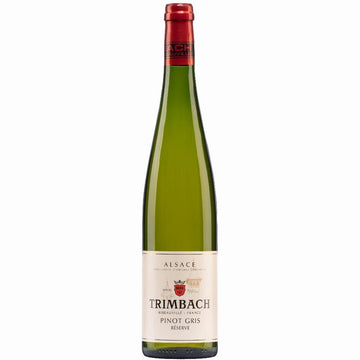
Trimbach Pinot Gris Reserve 2018
Trimbach
 Wine France White
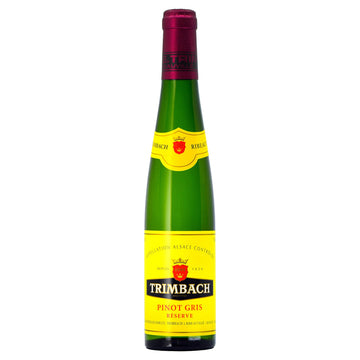
Trimbach Reserve Pinot Gris 375ml 2020
Trimbach
 Wine France White
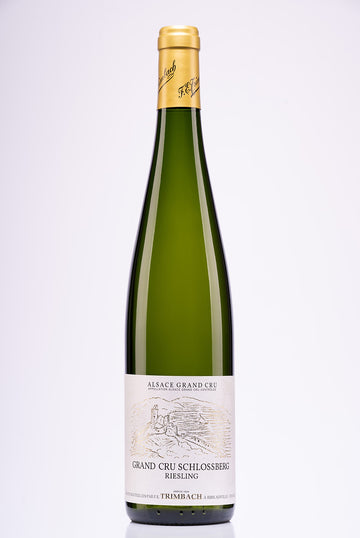
Trimbach Riesling Grand Cru Schlossberg 2022
Trimbach
 Wine France White
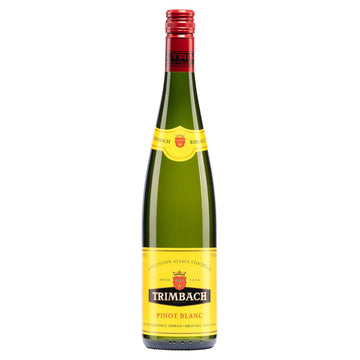
Trimbach Pinot Blanc 2023
Trimbach
Next bottle
Keep browsing
Picked to sit beside it.
 Wine France White
Trimbach Reserve Riesling 2022
Trimbach